Designed by Veethemes.com | Gooyaabi

Latest Posts

Showing posts with label Games. Show all posts

By Jenny Gove, Senior Staff UX Researcher, Google Play


We know you work hard to acquire users and grow your customer base, which can be
challenging in a crowded market. That's why we've heard from many of you that
you find tools like store
listing experiments
and universal
app campaigns
are valuable. It's equally important to keep customers engaged
from the beginning. Great design and delightful user experiences are fundamental
to doing just that.


We partnered with AnswerLab to conduct comprehensive user experience research
across a variety of verticals; including e-commerce, insurance, travel, food
ordering, ticket sales and services, and financial management. The resulting
insights may help you increase engagement and conversion by providing guidance
on useful and usable functionality.


The best app experiences seamlessly guide users through their tasks with
efficient navigation, search, forms, registration and purchasing. They provide
great e-commerce facilities and integrate effective ordering and payment
systems. Ultimately, an engaging app begins with attention to usability in all
of these areas. Learn tips on:


  • Navigation & Exploration

  • In-App Search

  • Commerce & Conversions

  • Registration

  • Form Entry

  • Usability and Comprehension


You can read the full article, design
your app to drive conversions
, on the Android Developers website, complete
with links to developer resources. Also get
the Playbook for Developers app
to stay up-to-date with features and best
practices that will help you grow a successful business on Google Play.


How useful did you find this blogpost?


By Mohammad El-Saadi, Business Development, Google Play


The Middle East and North Africa (MENA) region is a fast growing market for app and game developers on Google Play, and localizing is crucial to making the most of the opportunity. For example, the main grossing apps & games in Saudi Arabia have localized their store listings and their actual app and game on Google Play.


The British team behind the Skyscanner travel app had already localised it into more than 15 languages, yet the launch in Arabic was a huge milestone for them. Arabic speaking users really appreciated the localization and the app's average user rating increased from 4.62☆ to 4.77☆ after localization. Users engaged with the app longer, with an increase of 30% in their average session duration. Additionally 50% more travellers have been redirected to Skyscanner partners to book flight, hotel and car hire deals.


Skyscanner opening screen in English and in Arabic

But how difficult is it to correctly localize your app or game to Arabic?


The team at Skyscanner managed to develop Right-To-Left (RTL) Arabic language support within the app in two weeks: "Our initial fear was that we would need lots of manual coding for the layouts. However, the Android layout system handled all of the cases really well. We were already using *Start and *End margin and padding in line with guidelines, but there's also Android Studio support and Lint check to fix any issues automatically." says Mate Herber, Software Engineer.


Many other top apps and games developers are successfully investing in localizing for MENA users. For example, when game developer Pocket Gems localized War Dragons, the installs by Arabic speaking users tripled. Their percentage of revenue from Arabic language players also went from effectively 0% to ~1.5%.


We just refreshed the Now in Arabic collection (MENA only) with 16 newly localized apps and games, including titles like Netflix, Periscope and Transformers. It will be live until May 11 on Google Play in the following countries: Algeria, Bahrain, Egypt, Jordan, Kuwait, Lebanon, Morocco, Oman, Qatar, Saudi Arabia, Tunisia and United Arab Emirates.


Check our Localization Checklist for best practices when localizing for any language, and our Going Global Playbook. When your app or game in Arabic is ready, you can self-nominate to be part of future refreshes of the Now in Arabic collection by filling in this form.


How useful did you find this blogpost?


Posted by Josh Solt (Partner Developer Manager, Kids Apps at Google Play) and Noemie Dupuy (Founder & Co-CEO at Budge Studios)


Developers spend a considerable amount of resources driving users to download
their apps, but what happens next is often the most critical part of the user
journey. User onboarding is especially nuanced in the kids
space since developers must consider two audiences: parents and children. When
done correctly, a compelling onboarding experience will meet the needs of both
parents and kids while also accounting for unique considerations, such as a
child's attention span.


Budge Studios has successfully grown their
catalog of children's titles by making onboarding a focal point of their
business. Their target demographic is three to eight-year olds, and their
portfolio of games include top titles featuring Strawberry Shortcake, Hello
Kitty, Crayola, Caillou and The Smurfs.


"First impressions matter, as do users' first experience with your app. In fact,
70%1 of users who delete an app will do so within a day of having downloaded it,
leaving little time for second chances. As an expert in kids' content, Budge
tapped into our knowledge of kids to improve and optimize the onboarding
experience, leading to increased initial game-loop completion and retention." -
Noemie, Founder & Co-CEO at Budge Studios


Three key ways Budge Studios designs better onboarding
experiences:


1. Make sure your game is tailor-made for kids


When Budge released their app Crayola
Colorful Creatures
, they looked at data to identify opportunities to create
a smoother onboarding flow for kids. At launch, only 25% of first-time users
were completing the initial game loop. Budge analyzed data against gameplay and
realized the last activity was causing a drastic drop-off. It required kids to
use the device's microphone, and that proved too challenging for very young
kids. Budge was able to adjust the initial game loop so that all the activities
were accessible to the youngest players. These adjustments almost tripled the
initial loop completion, resulting in 74% of first-time users progressing to see
additional activities.


2. Earn parents trust by providing real value upfront


Budge has a large of portfolio of apps. Earning parents' trust by providing
valuable and engaging experiences for kids is important for retaining users in
their ecosystem and achieving long term success.


With every new app, Budge identifies what content is playable for free, and what
content must be purchased. Early on, Budge greatly limited the amount of free
content they offered, but over time has realized providing high quality free
content enhances the first-time user experience. Parents are more willing to
spend on an app if their child has shown a real interest in a title.


Working with top kids' brands means that Budge can tap into brand loyalty of
popular kids characters to provide value. To launch Strawberry
Shortcake Dreams
, Budge decided to offer Strawberry Shortcake, the most
popular character in the series, as a free character. Dress Up Dreams is among
the highest converting apps in the Budge portfolio, indicating that giving away
the most popular character for free helped conversions rather than hurting it.


3. Test with real users


Budge knows there is no substitute for direct feedback from its end-users, so
Budge involves kids every step of the way. Budge Playgroup is a playtesting
program that invites families to try out apps at the alpha, beta and
first-playable development stages.


The benefits from early testing can be as basic as understanding how the size
and coordination of kids' hands affect their ability to complete certain actions
or even hold the device, and as specific as pinpointing a less-than-effective
button.


In the testing stages of Strawberry Shortcake Holiday Hair, Budge caught an
issue with the main menu of the app, which would not have been evident without
observing kids using the app.


Prior to Playtesting:


After Playtesting:


In the original design, users were prompted to start gameplay by audio cues.
During testing, it was clear that the voiceover was not sufficient in guiding
kids to initiate play, and that additional visual clues would significantly
improve the experience. A simple design change resulted in a greatly enhanced
user experience.


The onboarding experience is just one component of an app, but just like first
impressions, it has a disproportionate impact on your users' perception of your
app. As Budge has experienced, involving users in testing your app, using data
to flag issues and providing real value to your users upfront, creates a
smoother, more accessible onboarding experience and leads to better results.


For more best practices on developing family apps and games, please check out The
Family Playbook
for
developers.
And visit the Android Developers website to stay up-to-date with features and
best practices that will help you grow a
successful business on Google Play
.


1.http://www.cmswire.com/customer-experience/mobile-app-retention-5-key-strategies-to-keep-your-customers/


How useful did you find this blogpost?


Posted by Sarah Thomson, BD Partnerships Lead, Indies, Google Play
Games


Mobile gaming is a fun place to be right now. It's a landscape seeing tremendous
success year after year with great potential for additional growth and
innovation. It's also a space where developers can express themselves with
creative game styles, mechanics, design and more. This is what the indie
community does best.


Here are 5 tips for indies by indies, shared by our gaming partners at 505
Games
, About
Fun
, Disruptor
Beam
, Klei
Entertainment
, and Schell
Games
.


1. Embrace being indie


Indies are inherently smaller operations and should embrace their agility and
ability to take risks. Petr Vodak, CEO at About
Fun
, recommends getting your product out there so you can
start taking feedback and apply your learnings to future projects. Don't be
afraid to fail! Remaining flexible and building in modularity so you can evolve
with the business needs is a strategy embraced by Pete Arden, CMO at Disruptor
Beam
. For instance, with their game Star Trek Timelines, the initial user
experience was tailored to avid Star Trek fans. Over time, as user acquisition
costs increased, they've changed the new player experience to appeal to their
evolving user base of gamers looking for a fun entertainment experience and less
the specific Star Trek IP.


2. Find a way to stand out


To help stand out in the ultra competitive mobile space, Jesse Schell, CEO of Schell
Games
, recommends doing something clever or very different. This strategy
has led them to explore the growth areas of new platforms such as AR & VR. While
new platforms present a field for opportunity and creativity, they're best to be
approached with the long term in mind allowing you to sustain the business until
critical mass is reached.


3. Build a community


There are many ways to build communities. If you have an existing fan base on
other platforms, cross-promote to drive awareness of your mobile offerings. You
can also look at porting titles over, but be aware of the differences in mobile
gaming habits and ensure you adapt your game accordingly.


4. Engage after install


Both 505
Games
and Klei
Entertainment
recommend running your premium titles as a service. Through
monitoring user reviews you can gain invaluable feedback and trends helping you
better understand user pain points and desires. In addition, by releasing
regular content updates and in-game events you create reason for users to get
back in the game. This not only drives reengagement, but 505 Games also sees
strong spikes in new installs aligned with major game updates.


5. Monetize in different ways


Similar strategy to above, dropping regular content refreshes and game updates
while offering a variety of monetization options gives users more ways to engage
with your game. Keeping your games fresh gives users reason to come back and
builds loyalty so you can cross-promote to your users with future game launches.


If you're looking for a fun new game to play, check out the great selection on
Indie
Corner
on Google Play. And if you're working on a new indie game of your
own, nominate your title for
inclusion.


Watch
more sessions
from Google Developer Day at GDC17 on the Android Developers
YouTube channel to learn tips for success. Visit the Android Developers website
to stay up-to-date with features and best practices that will help you grow a
successful business on Google Play
.


How useful did you find this blogpost?


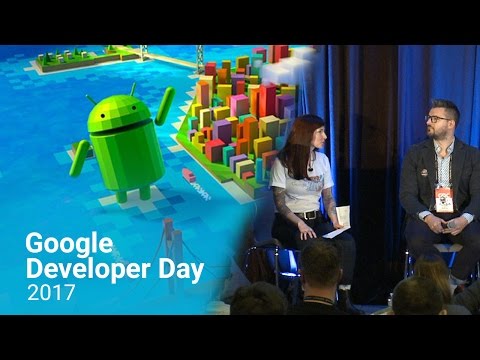
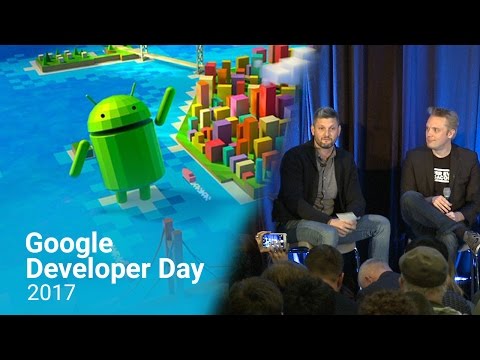
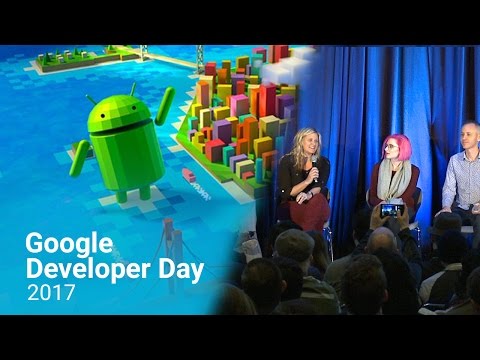
Posted by Dave Geffon, Partnerships Manager, Google Play Games


The most successful games usually have the strongest communities. They are a
powerful force in driving additional engagement and increasing awareness for
your titles. At GDC 2017, we spoke with a few game developers about best
practices for successfully building their own communities. Watch the panel
session below to hear advice from Seriously,
Social
Point
, and Super
Evil MegaCorp
.


1. Be authentic


Community is a mindset; be honest, transparent & patient with
your communications. Loyal users are extremely valuable, thus the folks at Super
Evil Megacorp say that you should act like you have to earn every player.


2. Start small


Build a plan and start today. Launch your social media
channels, look into influencers, and create a strategy. Whether it's sharing one
piece of fan art a week across your network, or running a closed beta to gather
feedback from your most valued users, take action and learn what works best for
you and your users.


3. Play match-maker


When finding influencers to support your game, ensure
they're a genuine match. Make sure the influencer's audience is a good fit with
your game and existing community.


4. Seek feedback 


Communities are passionate. Use feedback to understand what
kind of game and features your users want. Be flexible and iterative so you can
react and evolve your game with the needs and desires of your community.
However, don't be afraid to stay true to what you stand for as sometimes you'll
need to agree to disagree with some players.


5. Build for the long-term


The lifespan of games is continuing to grow. Plan
your business strategy, update cycles and community efforts to roll out over
time and expand with your growing experiences and user-base.


Watch
more sessions
from Google Developer Day at GDC17 on the Android Developers
YT channel to learn tips for success. Also, visit the Android Developers website
to stay up-to-date with features and best practices that will help you grow a
successful business on Google Play
.


How useful did you find this blogpost?


Posted by Adam Gutterman, Go-To-Market Strategic Lead, Google Play
Games


Last month at the Game Developers Conference (GDC), we held a developer panel
focused on sharing best practices for building successful app and game
businesses. Check out 5 tips for developers, both large and small, as shared by
our gaming partners at Electronic
Arts
(EA), Hutch
Games
, Nix
Hydra
, Space Ape
Games
and Omnidrone.


1. Test, test, test


The best time to test, is before you launch; so test boldly and test a lot! Nix
Hydra recommends testing creative, including art style and messaging, as well as
gameplay mechanics, onboarding flows and anything else you're not sure about.
Gathering feedback from real users in advance of launching can highlight what's
working and what can be improved to ensure your game's in the best shape
possible at launch.


2. Store listing experiments


Run experiments on all of your store listing page assets. Taking bold risks
instead of making assumptions allows you to see the impact of different
variables with your actual user base on Google Play. Test in different regions
to ensure your store listing page is optimized for each major market, as they
often perform differently.


3. Early Access program


Space Ape Games recently used Early Access to test different onboarding
experiences and gameplay control methods in their game. Finding the right
combination led them to double-digit growth in D1 retention. Gathering these
results in advance of launch helped the team fine tune and polish the game,
minimizing risk before releasing to the masses.


"Early Access is cool because you can ask the big questions and get real
answers from real players," Joe Raeburn, Founding Product Guy at Space Ape
Games.


Watch the Android Developer Story below to hear how Omnidrone benefits from
Early Access using strong user feedback to improve retention, engagement and
monetization in their game.


Mobile game developer Omnidrone benefits from Early Access.


4. Pre-registration


Electronic Arts has run more than 5 pre-registration campaigns on Google Play.
Pre-registration allows them to start marketing and build awareness for titles
with a clear call-to-action before launch. This gives them a running start on
launch day having built a group of users to activate upon the game's release
resulting in a jump in D1 installs.


5. Seek feedback


All partners strongly recommended seeking feedback early and often. Feedback
tells both sides of the story, by pointing out what's broken as well as what
you're doing right. Find the right time and channels to request feedback,
whether they be in-game, social, email, or even through reading and responding
to reviews
within the Google Play store.


If you're a startup who has an upcoming launch on Google Play or has launched an
app or game recently and you're interested in opportunities like Early Access
and pre-registration, get
in touch with us
so we can work with you.


Watch
sessions
from Google Developer Day at GDC17 on the Android Developers YT
channel to learn tips for success. Also, visit the Android Developers website to
stay up-to-date with features and best practices that will help you grow a
successful business on Google Play
.


How useful did you find this blogpost?


Posted by Matteo Vallone, Google Play Games Business Development


Today, at Saatchi Gallery in London, we hosted the final event of the first Google Play Indie Games Contest in Europe. The 20 finalists, selected from nearly 1000 submissions, came from 12 countries to showcase their games to an excited room of gamers, industry experts and press. Selected based on the votes of the attendees and the Google Play team, the Top 10 pitched in front of a jury of industry experts who chose the top winners.


Stay tuned for more pictures and a video of the event.


Without further ado, join us in congratulating the winners!


Winner & Unity prize winner:


Reigns, by Nerial, from the United Kingdom


You are the King. For each decision, you only have two choices. Survive the exercise of power and the craziness of your advisors... as long as you can.


Runners up:


The Battle of Polytopia, by Midjiwan AB, from Sweden


A turn based strategic adventure. It's a game about ruling the world, fighting evil AI tribes, discovering new lands and mastering new technologies.


Causality, by Loju, from the United Kingdom


A puzzle about manipulating time, altering the sequence of events and changing the outcome of each level to help a group of astronauts find a route to safety.


The other top games selected by the event attendees and the Google Play team are:


Blind Drive, by Lo-Fi People, from Israel


You're driving blindfolded as a mysterious voice gives you suicidal commands on the phone. Survive on-rushing vehicles using only your hearing to guide you.


Gladiabots, by GFX47, from France


A competitive tactical game in which you design the AI of your robot squad. Use your own strategy, refine it online and fight for the top of the leaderboard.


Happy Hop: Kawaii Jump, by Platonic Games, from Spain


This isn't just an original one-tap endless hopper, it's also the cutest one. Ever wondered what's in the end of the rainbow? That would be Happy Hop.


Lost in Harmony, by Digixart Entertainment, from France


Experience music in a new way with the combination of rhythmic tapping and choreographic runner to go through two memorable journeys with Kaito and M.I.R.A.I.


Paper Wings, by Fil Games, from Turkey


A fast-paced arcade game which puts you in control of an origami bird. Avoid the hazards and collect the falling coins to keep your paper bird alive.


Pinout, by Mediocre, from Sweden


A breathtaking pinball arcade experience: race against time in a continuous journey through this canyon of pulsating lights and throbbing retro wave beats.


Rusty Lake: Roots, by Rusty Lake, from Netherlands


James Vanderboom's life drastically changes when he plants a special seed in the garden. Expand your bloodline by unlocking portraits in the tree of life.


Check out the prizes


The prizes of this contest were designed to help the winners showcase their art and grow their business on Android and Google Play, including:


  • YouTube influencer campaigns worth up to 100,000 EUR


  • Premium placements on Google Play


  • Tickets to Google I/O 2017 and other top industry events


  • Promotions on our channels


  • Special prizes for the best Unity game


  • And more!


What’s next?


The week is not over just yet for Indie games developers. Tomorrow we are hosting the Indie Games Workshop for all indie games developers from across EMEA in the new Google office in Kings Cross.


It’s been really inspiring to see the enthusiasm around this inaugural edition, and the quality and creativity of the indie games developed across the eligible European countries. We are looking forward to bringing a new edition of the contest to you in late 2017.


How useful did you find this blogpost?